
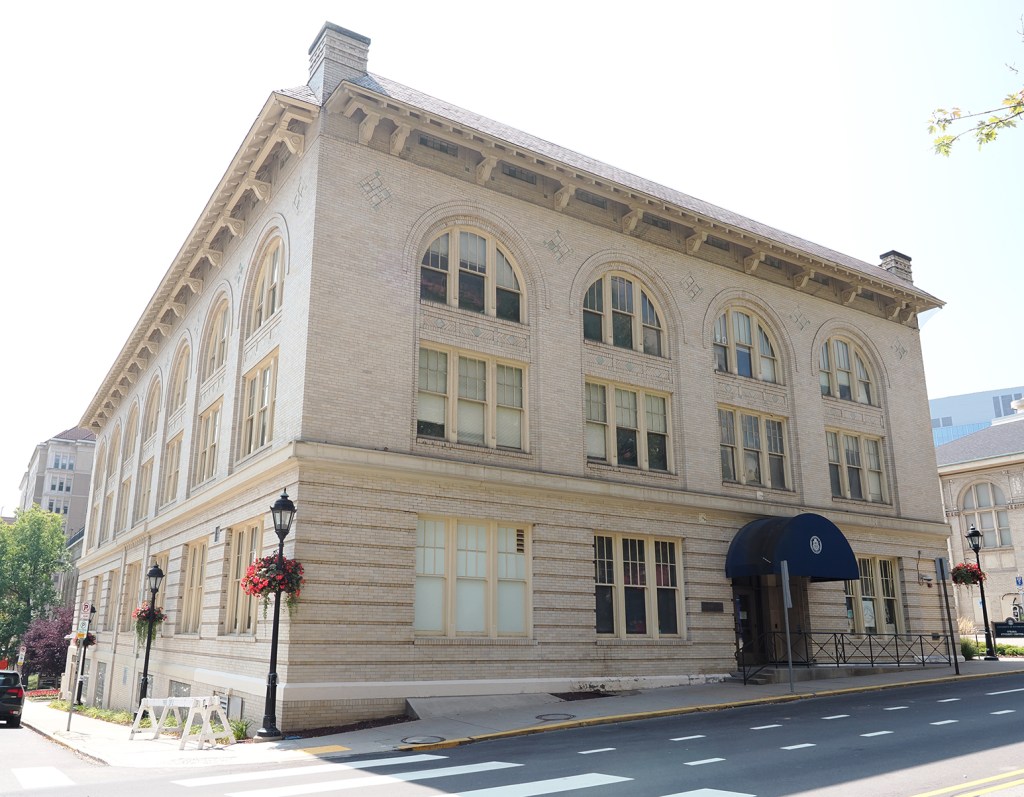
It’s my sixth day of travel and I’m limping around the outside of the Concordia Club. It’s August. It’s eighty-nine degrees. I’m sweating profusely. The humidity has caused my hair to puff out of my ponytail creating a frizzy halo around my head resembling a baby orangutan. There’s a cream cheese stain on my t-shirt and a poppyseed stuck between my front teeth that the corner of a business card only managed to jam in deeper. The doors are locked, and I want in.
What is a club? It’s more than simply a group of people with common interests, shared backgrounds. For one thing, you have to be invited by an active member to be in a club. And then you have to pay dues just to stay in that club. There’s an exclusivity to a club. A division. You are in, and you are out. Clubs share their resources. The country club, the yacht club, the beach club. Pools, tennis courts, golf courses, swim floats, club houses and restaurants with a special sandwich that’s actually two sandwiches in one!
All those private groups gave kids access to cool shit to do during the summer. But for my mother it was a hard no. To be fair, clubs were expensive, and although we lived in a wealthy coastal Connecticut town, we weren’t part of that whole scene. And maybe that’s another reason my mom never joined the clubs. She didn’t want to be part of that whole scene. She didn’t want to hang out with the members of the club.
Men used to love clubs. We’d sneak off to rooms with dark, wood paneling and a billiard table where we’d smoke cigars, swirl our brandy, blow foam off our lagers, shuffle and deal cards. Although women did start clubs occasionally (the literary-based Women’s Club of Pittsburgh met regularly from 1875-1957), clubs were– and to a certain extent, still are–a man’s space. Sara Petyk, my Pittsburgh host, and repository of local facts tells me on a drive that the Iron City used to be home to a myriad of private, ethnic social clubs from the late eighteen hundreds to the present. There was the Italian Society of Mutual Aide, Sons of Italy, and the Spigno Saturnia Club (also Italian). For Slavs there was the Homestead Slavs Club, Slovak Home, and the Kollar Club. There was the Polish Home, American-Rusin Club (Russian), Männerchor (German Christian), Loendi Club (black), FROGS club (also black), and the Beacon Club (Jewish at first but opened their doors to black and Italian gangsters later). And that list was compiled after just a quick search on Google.
Emmanual Wertheimer, my third great grandfather, was a member of The Concordia Club, a private social organization for the German Jewish elite of Pittsburgh. Members included such big wigs as Barney Dreyfuss, the owner of the Pirates and Edgar J. Kauffman of Kauffman’s Department Store fame. Two days before my suspicious circumambulation of the Concordia Club, I spent an afternoon in the archive of the Heinz Historical Center. This consisted flipping through pages upon pages upon pages of meeting notes of the Concordia Club starting at back in 1874, the beginning. The first challenge of these meeting notes became immediately apparent. Handwriting. Now, I’ve been a middle and high school teacher for almost twenty years, and I’ve muddled through some pretty bad scrawl, but this required an optical workout equal to trying to pick out the dolphin in a Magic Eye poster. The records were penned by the acting secretaries (men). A few had pretty decent handwriting, but most required getting used to, sort of like getting used to an alternative creamer in your coffee. The first few sips, you’re thinking this isn’t right. Nope. I don’t like it. But after a few more you don’t notice anymore. (As you can imagine, I’m trying to get used to Trader Joe’s Coconut Creamer. I’m still in the “what is this liquid shit?” phase.) Some handwriting, some secretaries I began to hate. As much as I strained, squinted and bulged, the handwriting remained an enigma. There was a certain beauty to it, however. One particular secretary, a dirty degenerate in terms of penmanship wrote with such an electric, slanty rhythm (like lightning or windblown sleet!) that I just had to sit back and admire the Pollack-y over-all-ness of the page. But legible it was not. If his scribbles were a coffee creamer, I’d prefer to drink mine black.
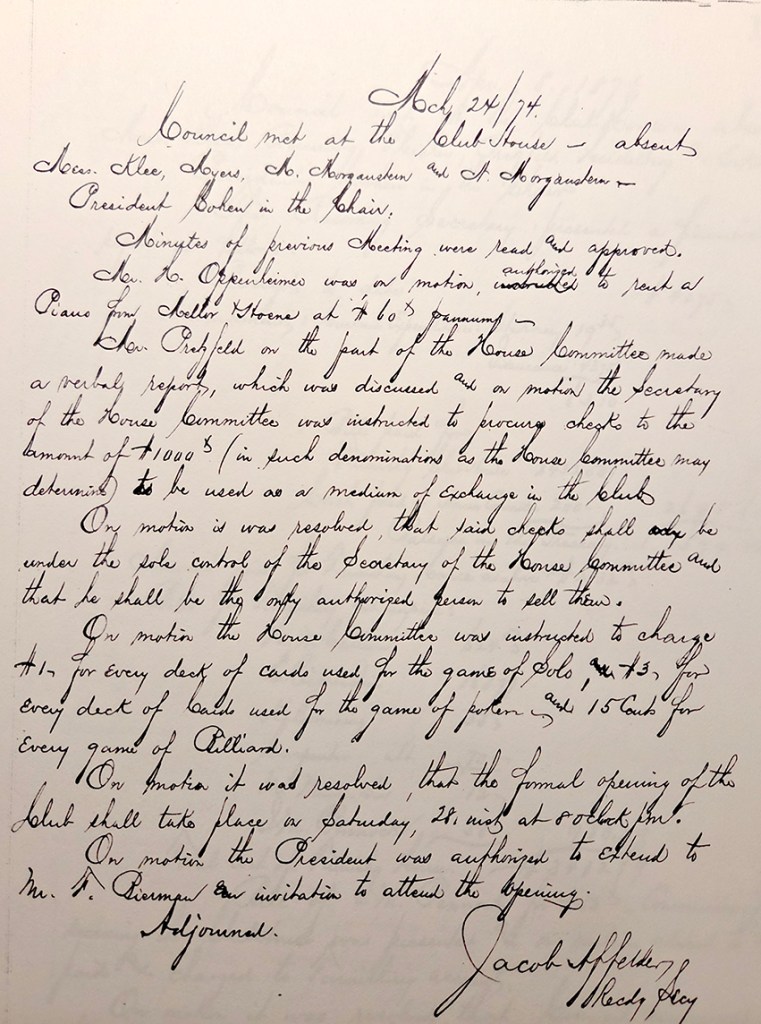
One commonality that the meeting notes shared was their formality and dogged adherence to structure. The meetings always started with attendance. Which officers were present? It then proceeded to new membership. To become a member of the Concordia Club, you had to be invited by a current member…which begs the question, how did the first member get inducted? The names of potential members must be written on the blackboard at least one week in advance of the meeting…to allow for what? Dirt-digging? Tea-spilling? Background checks? The members would then vote using white and black balls dropped into a special wooden ballot box. White for yea. Black for nay. This is the origin of the term blackballing, because in some groups a single black ball can disqualify a candidate. In the Concordia Club, if the candidate received five black balls, they were out, which seems like a lot of people to not want you in the group.

The next section of the meeting notes was a summation of how they were going to spend their collected dues. For a while, the options were limited. Rental and repair of the hall was a significant line item. Furniture, flooring, a piano, billiard tables which apparently were always wearing out! Then came the list of those members who paid their dues. Names and numbers, the list lengthened as the club gradually grew in membership. Sometimes, there was a break in the rhythm. Emmanuel asked to form a small orchestra to play at social events (approved!). Sometime there were special meetings like when a proposal was raised about whether to allow poker in the club. This led to a longer discussion which led to a heated debate. When put to a vote, the members approved the measure, but wait—in an unforeseen turn of events, the officers met in private and overruled them. A sudden chuckle escaped, surprising the polished wood stillness of the archive. Blackballed, I whisper.
Clubs were the health insurance of the working class. That what Sara tells me as we speed along the bank of the Monongahela pointing out the ghosts of steel mills. Disability, widows pay, they took care of each other. And you can see that in the Concordia Club notes. At the end of every meeting, a sum was set aside for the Pittsburgh Homeopathic Hospital, or the hall was rented out to the Hebrew Benevolent Society whose goal was to provide relief to “our unfortunate and indigent brethren, and to alleviate their sufferings.” And, I suppose that is the ultimate power of a club, the power of the group over the individual, the power to pool resources, to welcome, to give comfort to weary travelers and refugees.
I’ve been in several clubs in my lifetime, and by club I mean a social organization that regularly met and ideally had some sort of structure and bylaws. Of course, I have been in big organizations and “societies” such as Thesbians, National Art honors Society, Boy Scouts, and I supposed those count. But I find the homespun clubs more interesting.
These are the clubs in which I have been in or art currently a member:
Stealing Club- President, founder and member for one day. 1989. Open membership. Created to form a nimble team of shoplifters in order to target local businesses. Meeting place- under white pine at the intersection of I-95 and Lyme St. Items stolen- Bart Simpson memorabilia, Big League Chew, Penthouse magazine (see Sex Club). Club disbanded after president was caught and barred from entering Old Lyme Pharmacy.
Sex Club- One year membership. 1987-1988. Created by my neighbor and best friend, K. Meetings involved looking at stolen porno magazines (see Stealing Club) and talking about “humping”. Meetings held weekly in the loft in his barn. Club dissipated as membership ceased to grow and supplies dwindled.
Yellow Jackets- Lifetime member. 1988-present. Founded by same neighbor after disbanding Sex Club. Membership open to sisters. Created to convert the dozens of forts recently created into new clubhouses. Meetings paused when members suffered from allergic reactions to poison ivy after investigating an abandoned well as a potential club house. Next meeting not scheduled.
Leaning Jowler- Two year membership. 2006-2008. Meetings held monthly. Main Activity- t-shirt design by rotating club members. Other activities- drinking. Club disbanded after attempts to keep it “secret” led to social friction.
Tucson Essay Club- 2025-present. Meetings held monthly. A literary club of writers and readers of creative nonfiction. Activities- attend book events, socialize, write and share essays about Tucson.
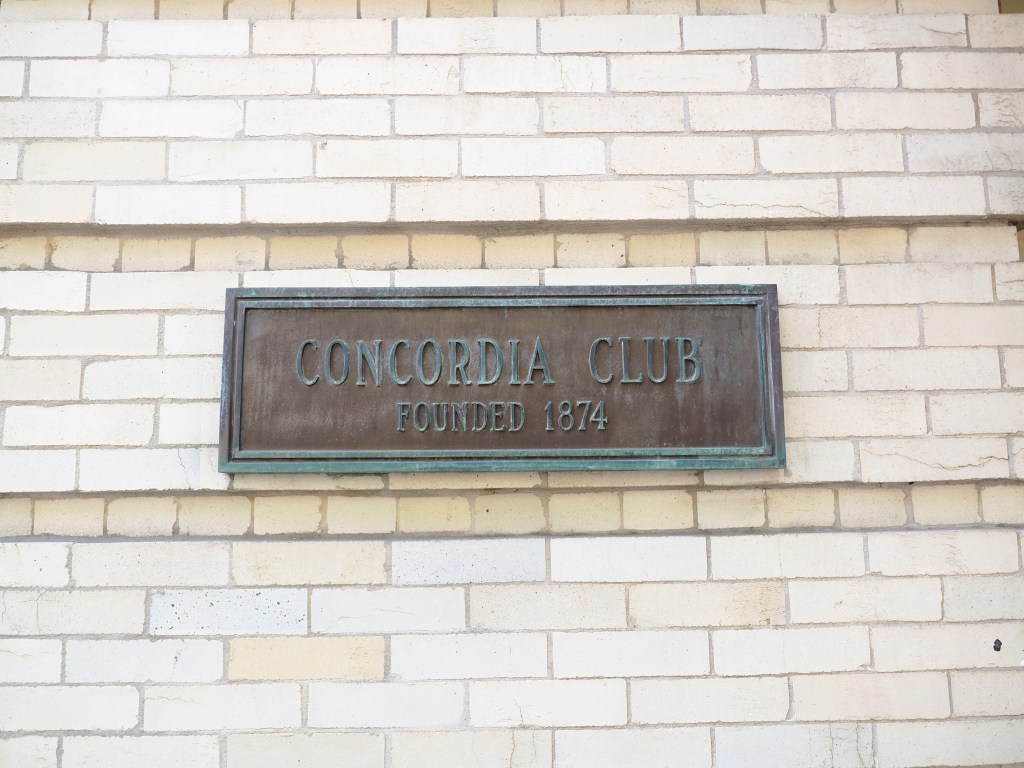
As with many of the clubs in Pittsburgh, the Concordia Club is no more. The building, having been sold to the University of Pittsburgh in 2009, was rebranded as the O’Hara Student Center. There is a plaque next to the door that reads Concordia Club 1874. I circle the structure one more time. It’s beautiful building, brick the color of Bit-O-Honey with subtle seafoam green diamonds in-between and around the large two-story windows. I’m looking for a way in, but all the doors require a Pitt access card. Even a sneak-peek is out of the question as the ground floor windows were filled in with glass block. Click, click, click goes my camera. After one circuit, I’m back at the front. For my last shot, I compose a photograph of my reflection in the glass of the door so that it looks like I’m inside the lobby looking out. This will have to do.

 Porter McDonald